
What Is Kung Pao Chicken? Origin, Ingredients & the Authentic Sichuan Recipe
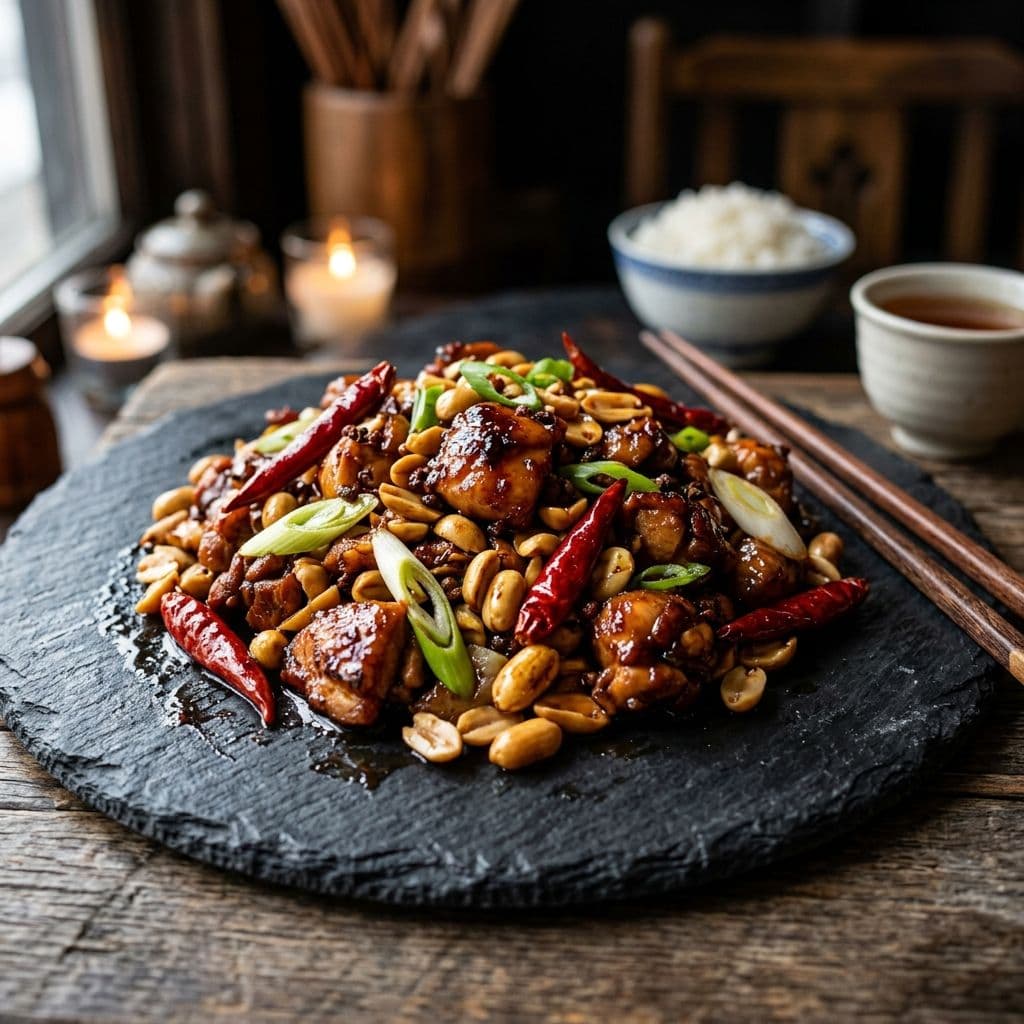
Kung Pao Chicken is a 19th-century Sichuan dish with chicken, peanuts, and dried chilies. The authentic recipe vs. the American version.
Kung Pao Chicken is gōng bǎo jī dīng (宫保鸡丁), a 19th-century Sichuan dish. Cooks dice chicken thigh, fry it hot with peanuts, dried red chilies, and Sichuan peppercorns, then bind everything in a sweet-sour-numbing sauce. China Jade serves the Chengdu version. It tastes sharper, smokier, and more numbing than the red, sugary kung pao on most American-Chinese menus. The name honors Ding Baozhen (丁宝桢), a Qing-dynasty governor of Sichuan whose imperial title was Gōng Bǎo, Palace Guardian. His household cooks fixed the recipe in the 1860s.
What Is Kung Pao Chicken?
Three flavor layers build the dish. The wok cook chars dried chilies and toasts Sichuan peppercorns in hot oil. Diced chicken thigh, coated in cornstarch and egg white, hits the pan and sears in seconds. A sauce of black vinegar, light soy, sugar, and starch slurry binds everything together. Roasted peanuts go in at the end and keep their crunch. Scallion whites, garlic, and ginger round the aromatics. The dominant flavor is málà, the numbing-spicy sensation that defines Sichuan cooking. A sour back-note from the black vinegar keeps the heat from running away with the dish.
Our guides to málà and Sichuan peppercorns cover the underlying principle. The peppercorn delivers a tingling vibration. The chili delivers heat. Together they open the palate.
The Origin: Sichuan, Not San Francisco
Ding Baozhen lived from 1820 to 1886. Born in Guizhou, he served as governor of Shandong and later Sichuan. Court records and Sichuan culinary histories credit his household kitchen with fixing the recipe in its current form: diced chicken, peanuts, dried chilies, peppercorns. After his death the court granted him the posthumous title Tàizǐ Tài Bǎo, Grand Guardian of the Crown Prince, which shortened in common usage to Gōng Bǎo. The dish took his name.
The Cultural Revolution (1966 to 1976) made the dish risky to serve. Imperial titles drew political attention. Restaurants renamed it hóngbào jī dīng (fast-fried diced chicken) or húlà jī dīng (paste-spicy diced chicken) to scrub the aristocratic reference. The original name came back in the 1980s and stands as the standard today.
Authentic Sichuan vs. American-Chinese Kung Pao
The kung pao you grew up with may be a separate dish from the one you would eat in Chengdu. Both have followings. They split from the same recipe a century ago and travelled different roads.
The Sichuan version uses whole dried red chilies, Sichuan peppercorns, Chinkiang black vinegar, light soy, a small amount of sugar, scallion whites, garlic, ginger, peanuts, and chicken. The sauce sits thin on the chicken and clings without pooling. The dominant sensation is numbing-spicy. The color reads brown-amber. You will find no bell peppers, no celery, no baby corn.
The American-Chinese version keeps the dried chilies but drops the Sichuan peppercorns, so the numbing sensation vanishes. Cooks add green and red bell peppers, sometimes celery or zucchini. Many kitchens swap peanuts for cashews. The sauce thickens with ketchup or hoisin influence and runs sweeter. The color shifts to bright red. The result reads as a sweet-spicy stir-fry that shares an ancestor with the Sichuan dish and tastes different on the tongue.
China Jade serves the Sichuan version: real Sichuan peppercorns, dried chilies, peanuts, no bell peppers. If you have only had the American version, your first bite of the Sichuan one will feel familiar in outline and different in detail. The meat runs leaner. The oil tastes smokier. The tingle on your lips tells you which version you are eating.
The Ingredients That Define Kung Pao
Five ingredients carry the dish:
- Chicken thigh, diced into half-inch cubes and coated with cornstarch, egg white, and Shaoxing wine. Thigh holds juicier than breast at wok-heat speeds.
- Dried red chilies, usually érjīngtiáo (二荆条) from Sichuan. Mild to medium heat with strong aroma once they hit hot oil. They flavor the oil. You leave them on the plate.
- Sichuan peppercorns, the husks of Zanthoxylum bungeanum, toasted for seconds to release hydroxy-alpha-sanshool. That compound creates the má (numbing) sensation.
- Peanuts, dry-roasted, folded in at the end so they hold their crunch. Cashews change the texture and the flavor, which is why most Sichuan kitchens stay with peanuts.
- The sauce, built from light soy, Chinkiang vinegar (aged black rice vinegar), sugar, a splash of Shaoxing wine, and a small slurry of cornstarch. The soy and vinegar carry the umami. The sugar evens the sour edge.
How China Jade Makes Kung Pao Chicken
The wok runs over 700°F at the bottom of the pan. Our cook pours in oil, then drops in dried chilies and Sichuan peppercorns. Ten to fifteen seconds, enough to scent the oil without going bitter. The chicken hits next and sears in seconds, which is where wok hei, the smoky breath of the wok, comes from. Aromatics and sauce follow. Two or three tosses to coat. Peanuts and scallions fold in last. Under three minutes from cold pan to plate.
Speed is what makes the dish work. A slow wok yields wet, steamed chicken with no smokiness. A fast wok yields the lean, charred, scented kung pao you want.
How to Order Kung Pao at China Jade
Kung Pao Chicken sits on the Sichuan section of our menu. Order steamed jasmine rice with it. The rice tempers the heat and the tingle. For a full Sichuan table, pair it with Mapo Tofu and a quieter vegetable like garlic green beans or stir-fried bok choy. If you are ordering for six or more, see our guide to ordering Chinese food for the table.
New to Sichuan heat? Ask for mild. We will cut the chili count and keep the Sichuan peppercorn. The tingle makes the dish Sichuan; the burn is the dial you can adjust. Want it the way Chengdu cooks it? Ask for authentic spicy.
Visit China Jade
Try our Sichuan Kung Pao Chicken: real Sichuan peppercorns, dried érjīngtiáo chilies, no bell peppers. Open daily 11 AM to 9 PM at 16805 Crabbs Branch Way, Derwood MD.
View Our Menu →