
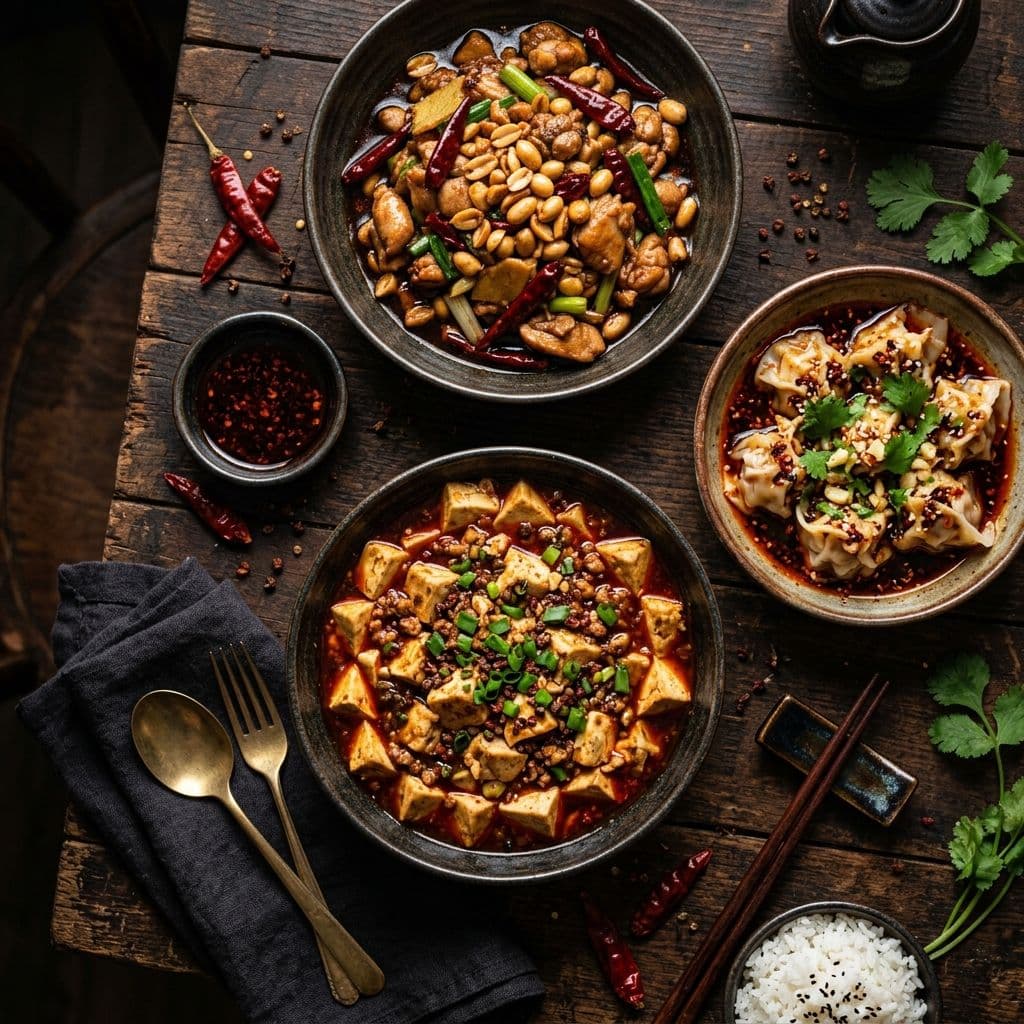
Málà (麻辣) = numbing from Sichuan peppercorns + spicy heat from dried chilies. How it works and which China Jade dishes have it.
Málà (麻辣, pronounced mah-lah) is the defining flavor profile of Szechuan cuisine. The term combines two Chinese characters: má(麻), meaning “numbing” or “tingling,” and là(辣), meaning “spicy hot.” Together, they describe the simultaneous sensation of numbness from Sichuan peppercorns and burning heat from dried chilies. Málà is more than a flavor combination. It is a distinct physiological experience that engages both the taste and touch systems at once, producing a sensation found in no other regional cuisine. Dishes described as málà include mapo tofu, dan dan noodles, twice-cooked pork, and Kung Pao chicken. The profile is what separates authentic Szechuan cooking from Chinese-American cooking and from every other regional Chinese cuisine.
What Does Málà Mean, Exactly?
The two characters each describe a distinct physical sensation:
- Má (麻), numbing: caused by hydroxy-alpha-sanshool in Sichuan peppercorns, which activates TRPA1 and KCNK3 nerve channels associated with touch and vibration. The sensation is a tingling, buzzing numbness, not heat, that builds over 20–30 seconds and lasts several minutes. It is a tactile effect, not a chemical burn.
- Là (辣), spicy heat: caused by capsaicin in dried chilies and chili bean paste (doubanjiang), which activates TRPV1 receptors, the same receptors triggered by physical heat above 43°C. The brain interprets capsaicin activation as burning, even at room temperature.
When both occur together, the effects interact: the numbing from má dampens the sharp pain response of là, allowing the heat to feel more pervasive and less sharp. The result is described in Chinese food writing as an “intoxicating” heat: intense but not painful in the same way as a chili-only dish.
Why Does Málà Feel Different from Regular Spicy?
Most “spicy” food activates only TRPV1 receptors (capsaicin pathway): a sharp, localized burning sensation that peaks quickly and fades. Málà engages a second system simultaneously. The numbness from Sichuan peppercorns blunts sharp pain signals while preserving and diffusing the heat sensation. Research from the University of Oxford (Barry Smith, 2012)described the interaction as creating a “flavour cocktail effect,” in which each component amplifies the perceived intensity of the other.
The practical result: a málà dish feels hotter than its chili content alone would suggest, lasts longer, and produces a mild endorphin response similar to exercise. Regular diners often describe a mild euphoria after eating a well-made málà dish. This is not metaphor. Capsaicin triggers endorphin release, and the numbing amplifies overall receptor activation.
The Two Ingredients That Create Málà
| Ingredient | Active Compound | Sensation | Receptor |
|---|---|---|---|
| Sichuan peppercorn | Hydroxy-alpha-sanshool | Numbing, tingling (má) | TRPA1, KCNK3 (touch) |
| Dried chili / doubanjiang | Capsaicin | Burning heat (là) | TRPV1 (heat/pain) |
Both ingredients must be present for true málà. A dish with only dried chilies is spicy (là) but not málà. A dish with only Sichuan peppercorns is numbing (má) but not málà. The combination in specific proportions is what produces the characteristic profile.
Málà Dishes at China Jade
The following dishes at China Jade are prepared with authentic málà seasoning:
- Mapo Tofu (麻婆豆腐): the canonical málà dish; silky tofu in doubanjiang sauce with ground Sichuan peppercorn stirred in at service
- Dan Dan Noodles (担担面): sesame-chili noodles with ground pork, ya cai, and Sichuan peppercorn in the sauce
- Kung Pao Chicken (宫保鸡丁): dried chilies and whole Sichuan peppercorns toasted in oil with diced chicken and peanuts
- Twice-Cooked Pork (回锅肉): pork belly stir-fried with doubanjiang and Sichuan peppercorns
- Szechuan String Beans (干煸四季豆): dry-fried with whole peppercorns, dried chilies, and garlic
- Hot and Sour Soup: mild málà profile; more là than má
Why Most Chinese-American Restaurants Don't Have Málà
Authentic málà requires two specific ingredients used in correct proportion: Sichuan peppercorns (which were banned in the United States from 1968 to 2005) and Pixian doubanjiang. Most Chinese-American restaurants adapted during the ban period, removing Sichuan peppercorns from recipes. After the ban lifted, many did not reintroduce them, either because sourcing was difficult or because their customer base had adjusted to peppercorn-free versions.
The result is a widespread category of “Szechuan-style” food that is spicy (là) but not numbing (má), and therefore not málà by definition. At China Jade, our head chef has used imported Sichuan peppercorns continuously for over 30 years (before, during, and after the import ban) and uses them in all dishes where they appear in the traditional recipe.
Visit China Jade
Experience authentic málà at China Jade: Mapo Tofu, Dan Dan Noodles, and Kung Pao Chicken made with real Sichuan peppercorns. Open daily 11 AM–9 PM at 16805 Crabbs Branch Way, Derwood MD.
View Our Menu →