
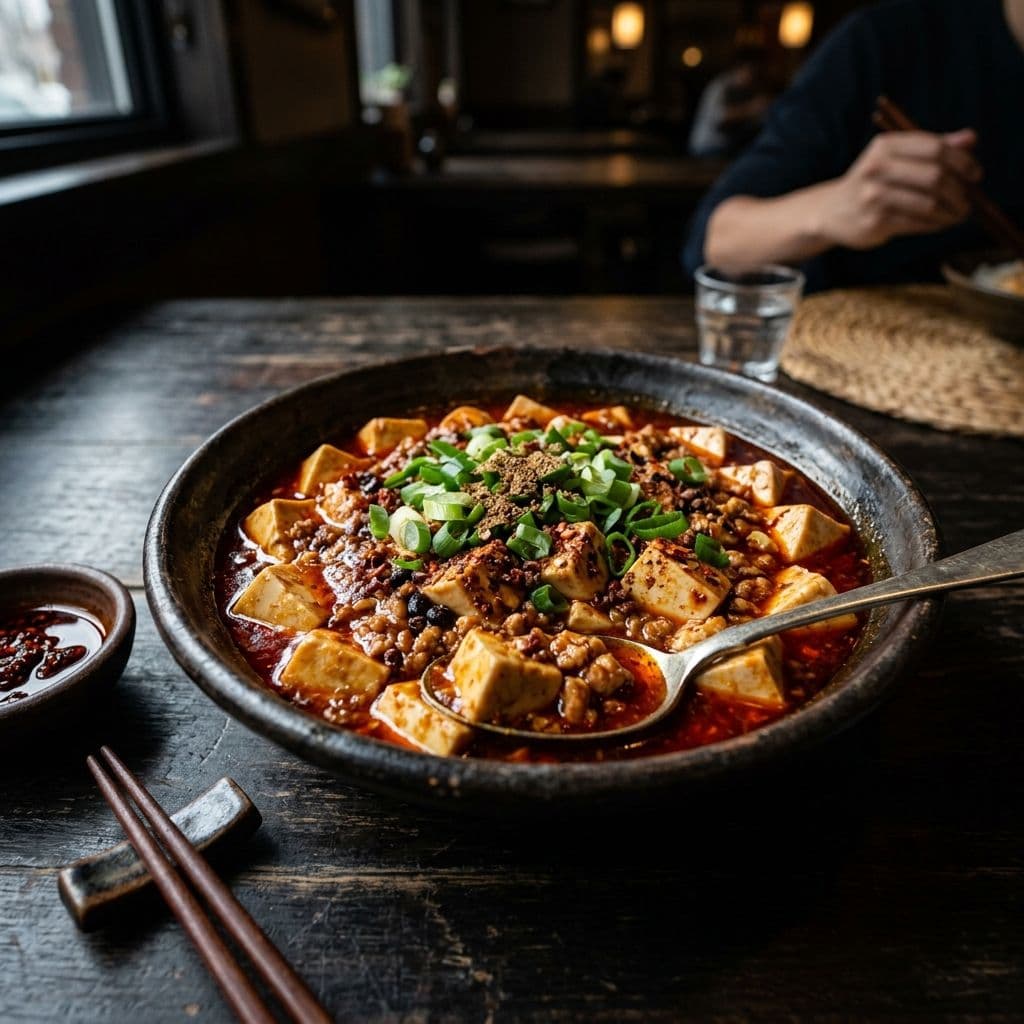
Mapo tofu is silky tofu in doubanjiang sauce with ground pork and Sichuan peppercorns. Ingredients, the málà flavor, and how China Jade makes the authentic version.
Mapo tofu (麻婆豆腐)is a Szechuan dish of silky tofu simmered in a sauce built from doubanjiang (fermented broad bean paste), fermented black bean, and ground pork, finished with Sichuan peppercorns. The name translates as “pockmarked old woman's tofu,” after the Chengdu cook credited with creating it in the 1860s.
What's in Mapo Tofu?
Authentic mapo tofu uses these core ingredients:
- Silky (soft) tofu: absorbs the sauce; firm tofu changes the dish's character
- Doubanjiang: fermented broad bean and chili paste from Pixian, Sichuan; provides color, heat, and depth
- Douchi (fermented black bean): adds umami and a secondary fermented layer
- Ground pork: a small quantity used as a flavor base, not the main protein
- Sichuan peppercorns: provide the numbing (má) sensation; ground and stirred in at the end
- Dried chilies or chili oil: provide heat (là), completing the málà profile
- Scallion, garlic, ginger: aromatic base
The dish is finished with a cornstarch slurry to thicken the sauce. Ground Sichuan peppercorns are stirred in at the end of cooking to preserve the numbing compounds, which degrade at prolonged high heat. Most American versions omit the Sichuan peppercorns entirely, removing the characteristic numbing sensation.
What Does Mapo Tofu Taste Like?
Mapo tofu delivers the málà (麻辣) flavor profile: numbing from Sichuan peppercorns (má) and spicy from dried chilies (là) at once. The sauce is oily, savory, and deeply fermented. The silky tofu provides a cool, neutral contrast to the intense sauce.
Traditional Sichuan cooking identifies five sensory layers in mapo tofu:
- Numbing (麻): Sichuan peppercorns activating touch receptors in the lips and mouth
- Spicy (辣): dried chilies and doubanjiang
- Hot (烫): served at high temperature in the sauce
- Tender (嫩): silky tofu texture
- Fragrant (香): from garlic, ginger, and fermented paste
Why Does Mapo Tofu Make Your Mouth Go Numb?
The numbing sensation comes from Sichuan peppercorns, which contain hydroxy-alpha-sanshool. This compound activates TRPA1 and KCNK3 nerve receptors, channels associated with touch and vibration rather than heat. Research published in NeuroReport (2013) measured the effect at approximately 50 Hz, matching the frequency of a vibrating tuning fork. The sensation is tactile buzzing, not burning.
When combined with capsaicin from chili peppers, the numbing effect amplifies perceived spiciness while reducing sharp pain. This is the málà phenomenon. At China Jade, our head chef uses imported Sichuan peppercorns in every dish that calls for them; most Chinese-American restaurants in the D.C. area substitute or omit them.
Is Mapo Tofu Vegetarian?
Traditional mapo tofu contains ground pork. At China Jade, we offer a vegetarian version on request: the same doubanjiang sauce and Sichuan peppercorns, without the pork. Because the pork functions as a background flavor base rather than the main protein, the vegetarian version is nearly identical in taste.
Note: Doubanjiang is not vegan (traditional fermentation process). If you have strict dietary requirements, confirm with staff before ordering.
Authentic vs. Americanized Mapo Tofu
Most mapo tofu in the United States differs from the Chengdu original in two ways: Sichuan peppercorns are omitted (removing the numbing sensation), and the sauce is thickened more heavily and made less oily. The result resembles a spiced braised tofu more than the original dish.
Authentic mapo tofu is visibly oily, intensely numbing, and served at high temperature. Our head chef has made this dish for over 30 years using the traditional Sichuan method, trained in Sichuan province before opening China Jade.
Visit China Jade
Order Mapo Tofu at China Jade: dine-in, takeout, or delivery. Available daily at 16805 Crabbs Branch Way, Derwood MD. Open 11 AM–9 PM.
Order Now →