
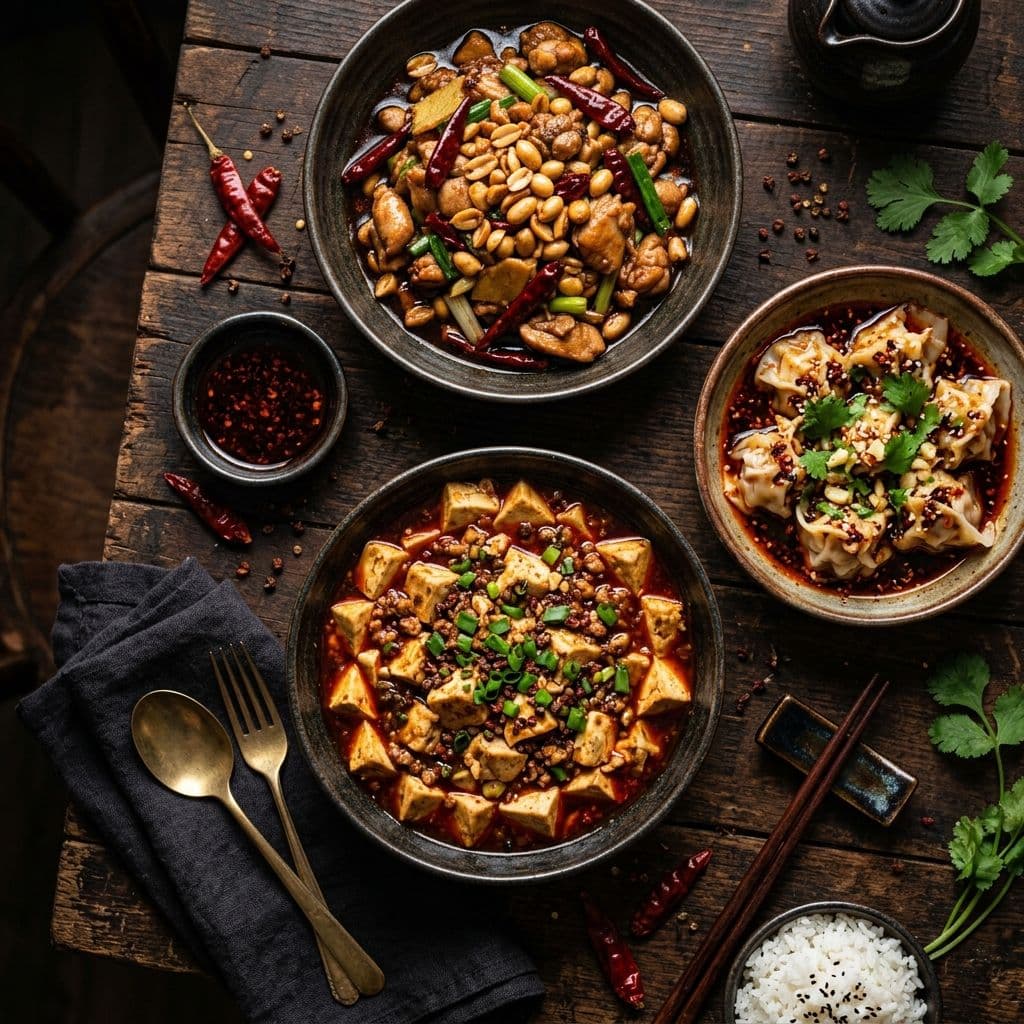
Szechuan peppercorn is not a pepper. It contains hydroxy-alpha-sanshool, which causes the numbing sensation (má) in Szechuan cuisine. A guide to how it works.
Szechuan peppercorn is not a pepper. It is the dried husk of the berry from the prickly ash tree (Zanthoxylum simulans or Zanthoxylum bungeanum), native to Sichuan province, China. Unlike black pepper or chili pepper, Szechuan peppercorn produces a numbing, tingling sensation (called má, 麻) rather than heat, and it belongs to the citrus family, not the pepper family.
What Does Szechuan Peppercorn Taste Like?
Szechuan peppercorn has a two-stage flavor: an initial citrusy, floral note (from volatile terpenes including linalool and limonene), followed within seconds by a pronounced numbing, buzzing sensation on the lips and tongue. The numbing builds over 20–30 seconds and lasts several minutes. It does not burn. People often describe it as mild carbonation on the tongue, or a low-frequency electrical tingle.
Unlike the sharp heat of black pepper (piperine) or the burning heat of chili pepper (capsaicin), the sensation from Szechuan peppercorn is tactile, affecting the sense of touch rather than temperature.
Why Does Szechuan Peppercorn Cause Numbness?
The active compound, hydroxy-alpha-sanshool, triggers TRPA1 and KCNK3 ion channels in nerve endings, channels associated with touch and vibration rather than heat. A 2013 study in the journal NeuroReport measured this activation at 50 Hz, the same frequency as a vibrating tuning fork. The sensation is a tactile phenomenon, not a chemical burn.
When combined with capsaicin from chili peppers, the numbing amplifies perceived spiciness while blunting the sharp pain response. This combination is called málà (麻辣), “numbing-spicy.” It is the defining flavor of Szechuan cuisine and the reason dishes like Mapo Tofu and Kung Pao Chicken taste unlike any other regional Chinese cooking.
How Is Szechuan Peppercorn Different from Black Pepper?
| Property | Szechuan Peppercorn | Black Pepper |
|---|---|---|
| Plant family | Rutaceae (citrus family) | Piperaceae |
| Active compound | Hydroxy-alpha-sanshool | Piperine |
| Sensation | Numbing, tingling (tactile) | Sharp heat, bite |
| Flavor profile | Citrusy, floral | Earthy, pungent |
| Botanical part used | Dried husk of berry | Dried berry |
How Is Szechuan Peppercorn Used in Cooking?
Szechuan peppercorn is used in two forms. Whole peppercorns are toasted in oil or added to braises, infusing the fat with flavor and mild numbness. Ground peppercorn is stirred into dishes at the end of cooking. The numbing compounds (sanshools) degrade at sustained high heat, so late addition preserves potency.
Key dishes where peppercorns appear prominently at China Jade:
- Mapo Tofu: ground peppercorn stirred in at service for maximum numbing
- Kung Pao Chicken: whole peppercorns toasted with dried chilies in the wok
- Dan Dan Noodles: in the spiced meat sauce
- Twice-Cooked Pork: in the braising liquid
- Szechuan String Beans: dry-fried with whole peppercorns and garlic
Why Did the U.S. Ban Szechuan Peppercorns?
From 1968 to 2005, the United States banned the import of raw Szechuan peppercorns under plant quarantine regulations aimed at preventing the spread of citrus canker (a bacterial disease that affects citrus trees). Since prickly ash belongs to the citrus family, the USDA classified it as a potential vector.
The ban was lifted in 2005, with the requirement that peppercorns be heat-treated before import. Most Chinese-American restaurants had by then adapted recipes without them and continued to omit them. At China Jade, our chef has sourced and used Szechuan peppercorns continuously and uses them in all dishes where they appear in the original recipe.
Visit China Jade
Try authentic Szechuan peppercorn in Mapo Tofu, Kung Pao Chicken, or Dan Dan Noodles at China Jade. Open daily 11 AM–9 PM at 16805 Crabbs Branch Way, Derwood MD.
View Our Menu →