
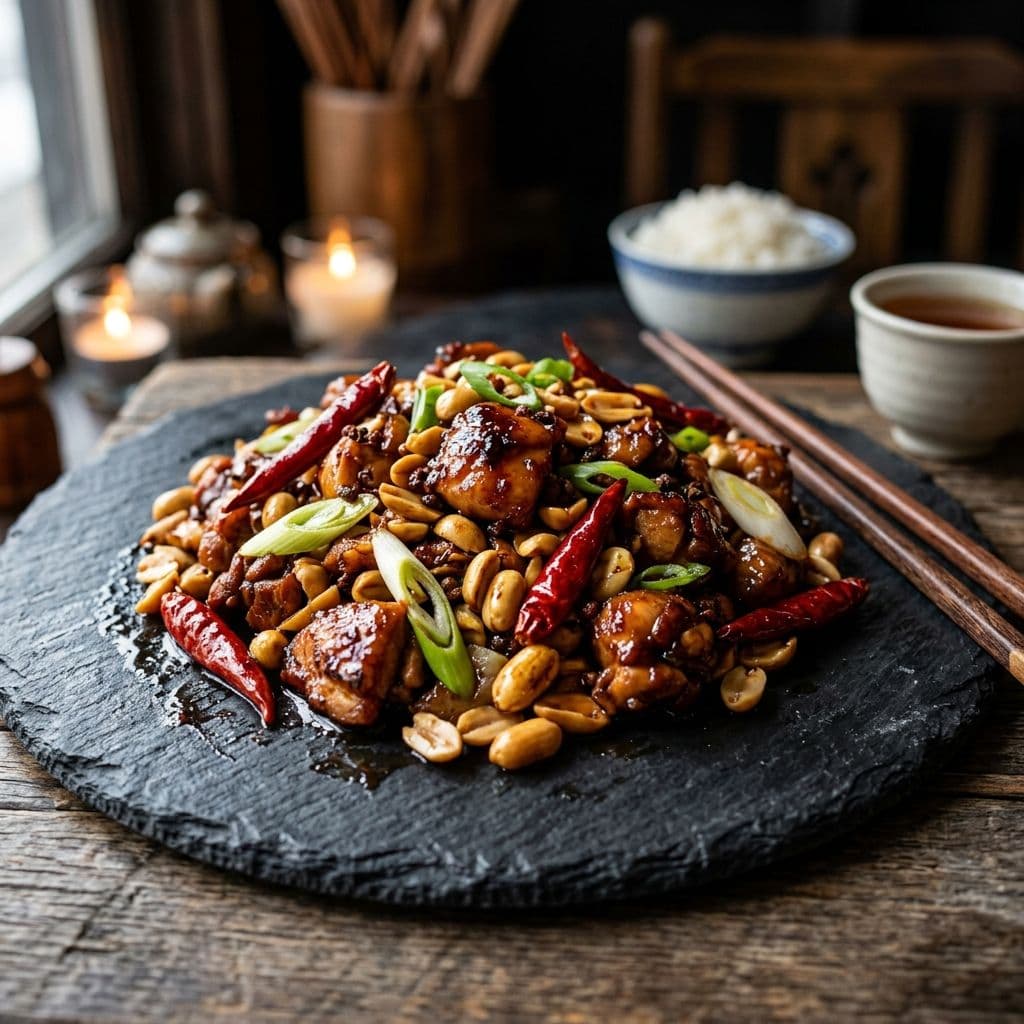
General Tso's chicken did not come from General Zuo Zongtang. Chef Peng Chang-kuei created it in 1950s Taiwan. American kitchens then sweetened and battered it. Here's the real story.
General Tso's chicken did not come from General Zuo Zongtang. The 19th-century Qing-dynasty general who supposedly inspired the dish never ate it. He died in 1885, decades before the recipe existed. The dish came from Chef Peng Chang-kuei (彭长贵), a refugee from Hunan province who fled to Taiwan after the Chinese Civil War and created the recipe in his Taipei restaurant in the 1950s. The original was savory, mildly spicy, and unbattered. The version most Americans know took a different shape in New York Chinese restaurants in the 1970s and 1980s: battered, deep-fried, sweet, glazed in a thick red sauce. Both dishes share a name and almost nothing else. This guide tells the real story.
Who Was General Zuo Zongtang?
Zuo Zongtang (左宗棠, 1812 to 1885) was a Qing-dynasty official from Hunan province. He commanded armies during the Taiping Rebellion and the Dungan Revolt in northwestern China. He was a military strategist, an agricultural reformer, and a tea grower of some note. He was not a chef. He never ate the dish that bears his name. The recipe arrived nearly seventy years after his death.
Chef Peng's Original Dish (Taipei, 1950s)
Peng Chang-kuei (彭长贵, 1919 to 2016) was born in Hunan province and trained in classical Chinese cooking. After the Chinese Communist Party took power in 1949, he relocated to Taiwan with the Nationalist government. In Taipei in the early 1950s, he created a chicken dish for a banquet honoring Admiral Arthur W. Radford, then chairman of the U.S. Joint Chiefs of Staff. Peng named it in honor of his fellow Hunanese, General Zuo.
The original was Hunan-style: stir-fried chicken with garlic, ginger, chili peppers, soy sauce, vinegar, and sugar. The flavor leaned savory with mild sweetness and mild heat. No batter, no deep-fry. Peng later opened restaurants in New York, where the dish first reached American audiences in the early 1970s.
How the American Version Took Shape (New York, 1970s and 1980s)
Two restaurants competed for credit. Peng's own Manhattan restaurant served his original Hunan version starting in 1973. T. T. Wang's Shun Lee Palace, also in Manhattan, served a battered and sweeter variant around the same time. American diners gravitated to the sweeter version. Restaurants across the country picked it up. By the late 1980s, the candy-glazed, deep-fried take had become a fixture on Chinese-American menus coast to coast.
When Peng visited New York in the late 1990s, he tasted the American version and called it strange and too sweet. He stayed loyal to the Hunan original for the rest of his career.
The Two Versions Compared
Hunan original: stir-fried (not deep-fried), unbattered chicken. Sauce of soy, black vinegar, sugar, chili paste. Balance leans savory. Chili heat present but in the background. Color reads brown.
American version: chicken dredged in cornstarch batter, deep-fried to a crisp crust. Sauce of soy, sugar, sometimes ketchup or hoisin, vinegar, and dried chilies. Balance leans sweet. Cornstarch slurry thickens the sauce. Color reads bright red. Many kitchens add broccoli florets that were not in the original.
General Tso's at China Jade
We serve General Tso's chicken in the American version, since that is the dish most diners arrive expecting. Our recipe stays closer to the New York original than to the candy-coated versions some chains serve. We cut the sugar back so the soy and vinegar still come through. We deep-fry the chicken to a crisp crust that holds for the first few minutes on the plate. The sauce coats without pooling.
If you want a closer-to-Hunan experience, ask for it without batter and with the sauce on the side. We can stir-fry the chicken in the Hunan-style sauce as a special order. It will not match what Chef Peng served in 1950s Taipei, but it will taste closer to that dish than to the deep-fried version.
Related Dishes Worth Knowing
General Tso's belongs to a family of battered, sweet-and-spicy chicken dishes that share a family resemblance:
- Sesame chicken: same batter and deep-fry technique, sweeter sauce with sesame seeds, no chili heat.
- Orange chicken: same technique, sweeter still, with dried orange peel.
- Chongqing chicken (là zǐ jī): the closest Chinese ancestor of these dishes. Small pieces of fried chicken buried in dried red chilies. Savory, deeply spicy, no sweetness. Closer to Sichuan tradition than to Hunan.
If you enjoy General Tso's and want to taste the savory-and-spicy branch of the family, try our Kung Pao Chicken or read our guide to authentic Szechuan cuisine.
Visit China Jade
Order General Tso’s Chicken at China Jade with the sauce balanced and the crust crisp. Open daily 11 AM to 9 PM at 16805 Crabbs Branch Way, Derwood MD.
View Our Menu →